
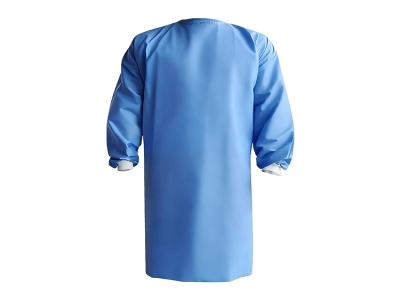
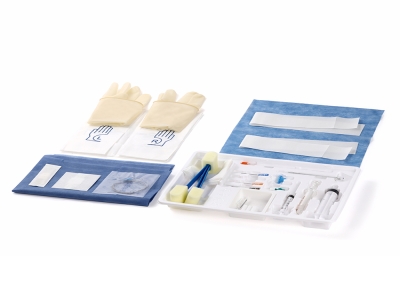
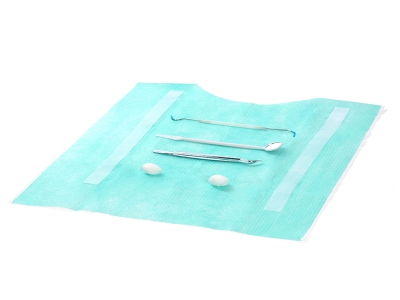
How to use the Disposable Wound Dressing Change Pack?
It’s inevitable to get scraped or bruised in daily life. For minor injuries, you can simply apply alcohol or iodophor and then put on a band-aid. However, for more severe injuries with a large area or deep wounds, you need to go to a professional medical institution for treatment and debridement. The Disposable Wound Dressing Change Pack came into being, with all necessary items prepared in advance, which greatly saves the preparation time before treating the injured, making it convenient and safe.
Features of the Disposable Wound
Dressing Change Pack
- Non-toxic, sterile, safe, and convenient, avoiding cross-infection;
- Rich in configuration specifications; the number of
configurations can be increased or decreased according to usage needs to
meet clinical requirements.
What is debridement?
Debridement is the most important, basic,
and effective method for dealing with open injuries. Through debridement, a
contaminated wound can be turned into a clean one, and an open injury can be
converted into a closed one. Since debridement often requires appropriate
enlargement of the wound, it is also called wound extension.
When is debridement applicable?
Debridement is suitable for treating fresh
wounds. Its purpose is to make the wound clean by removing foreign bodies,
necrotic, and infected tissues from open wounds. The basic principle of
debridement is sterility, which must be strictly observed to facilitate wound
healing. During debridement, it is necessary to repeatedly rinse the wound with
a large amount of normal saline or hydrogen peroxide, which is one of the
important steps in debridement care.
What should be noted during debridement?
The earlier debridement is performed after
a wound occurs, the better the effect. It should be done within 6-8 hours after
injury. If the wound is severely contaminated, it can become an infected wound
within 4-6 hours. For mildly contaminated wounds with few necrotic areas and
rich local blood supply, if treated with antibiotic wrapping in the early
stage, the timing can be appropriately delayed, and debridement can also be
performed after 12 hours. The scalp has strong anti-infective and healing
abilities, so even if debridement is performed 72 hours later, the effect is
still good.