
What kind of company is Jining Jianda?
27 Sep, 2025

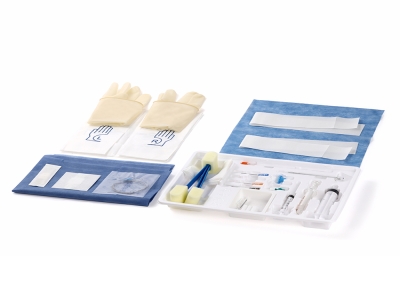
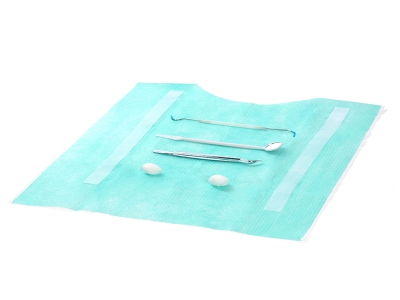

Disposable Sterile Surgical Gown
11 Nov, 2025
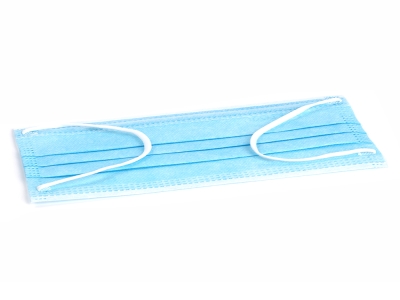
Disposable Medical Mask
11 Nov, 2025
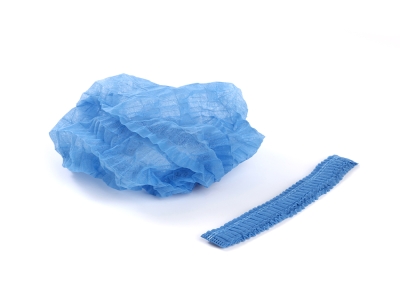
Disposable Medical Cap
11 Nov, 2025

Underpad
11 Nov, 2025
Disposable Anesthesia Puncture Procedure Pack | High Quality & Complete Configuration
The disposable Anesthesia PunctureProcedure Pack is used for puncturing and injecting drugs in various anesthesia methods such as epidural nerve block, subarachnoid block, and nerve block in the human body.
Model Specifications of Disposable
Anesthesia Puncture Procedure Pack
AS-E, AS-S, AS-E/S, AS-N
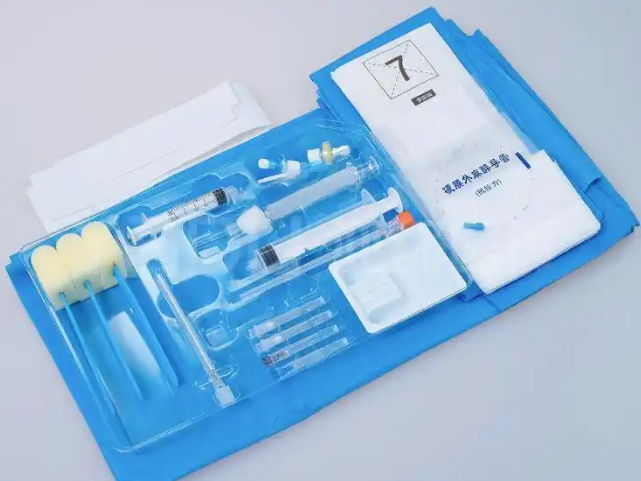
Applicable Departments
Anesthesiology Department | Emergency
Department | Pain Management Department | Obstetrics and Gynecology Department
Features of Disposable Anesthesia
Puncture Procedure Pack
- Adopts blister packaging. The glass syringe fits tightly in the
card slot to prevent breakage during transportation. The Tyvek packaging
paper effectively blocks bacteria, and ethylene oxide is easy to
volatilize.
- The tension-resistant epidural anesthesia catheter is made of
nylon material, improving the quality stability of the pack.
- The anesthetic puncture needle has a small spoon-shaped
curvature and a sharp feel.
- The air filter can filter particles larger than 0.5 microns.
- Multiple syringes are available for selection, including glass
syringes, low-resistance syringes, and Luer lock syringes.
- The reinforced anesthesia catheter is anti-clogging and
non-kinking, ensuring a stable drug delivery channel.
- Sharps collector: Prevents medical staff from needle stick
injuries and occupational exposure.
- Special dressing: Solves the problem that the anesthesia
catheter is not easy to fix and the infusion patch is easy to fall off due
to sweat and oil on the skin of puerperae after long-term catheter
indwelling.
Usage Methods of Disposable Anesthesia
Puncture Procedure Pack
- Open the inner packaging of the Anesthesia Puncture Procedure
Pack in a sterile environment and check whether the instruments in the
inner packaging are complete.
- Treat the skin at the puncture site with an appropriate
disinfection method and perform local anesthesia in a conventional way.
- Perform epidural puncture as usual. Draw air into the all-glass
syringe, connect it to the air filter, and then connect it to the puncture
needle for an air resistance test to verify whether the puncture needle
has entered the epidural space.
- Carefully insert the spinal needle through the epidural
puncture needle until the needle tip encounters resistance. Fix the
epidural puncture needle and insert the spinal needle into the arachnoid
membrane. Observe whether cerebrospinal fluid flows out to verify whether
the spinal needle is in the subarachnoid space.
- Keep the position of the spinal needle fixed and connect the
syringe to the spinal needle.
- Inject anesthetics evenly according to the requirements for the
diffusion of anesthetic drugs. During the injection process, closely
monitor the patient in accordance with the requirements of spinal
anesthesia and epidural anesthesia.
- After injection, withdraw the spinal needle. If resistance is
encountered during withdrawal, withdraw the spinal needle together with
the epidural puncture needle and replace the epidural needle for
re-operation.
- The operator can place the catheter into the epidural space
through the epidural puncture needle. The scale on the catheter will
indicate the position of the catheter. Adjusting the patient's body
position is conducive to the smooth placement of the catheter and can also
achieve the best anesthetic effect. After the catheter is in the correct
position, fix the catheter and pull out the epidural puncture needle.
- Connect the catheter to the catheter adapter and fix the
catheter tightly to the puncture site to prevent the catheter from falling
off or twisting.
- Perform epidural block after the subarachnoid block effect is
stable. Before injecting drugs into the anesthesia catheter, administer an
appropriate dose to verify whether the catheter position is appropriate.
Then, according to the requirements for the anesthetic level, inject
anesthetic drugs intermittently in stages in accordance with the usual
anesthesia method.
- After anesthesia, pull out the anesthesia catheter with uniform force. Do not pull it out quickly or forcefully to avoid the catheter breaking in the human body.