



What’s the Difference Between N95 and KN95 Masks?
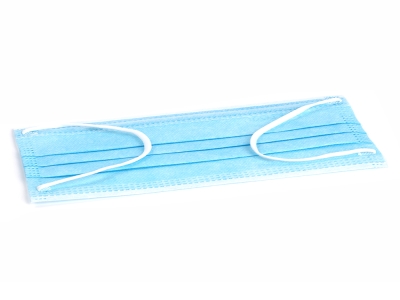
N95 and KN95 masks have equivalent protection levels and the same filtration efficiency, with both achieving a filtration efficiency of ≥95% for non-oil-based particles.
The key difference between N95 and KN95
masks lies in their testing and implementation standards.
N95 masks are
certified to the U.S. NIOSH (National Institute for Occupational Safety and
Health) standard, following the interpretive guidelines of CFR
42-84-1995. The "N95" designation means the mask has a filtration
efficiency of no less than 95% for solid and water-based aerosols
(oil-intolerant) — i.e., the percentage of particles removed from the air.
KN95 masks
adhere to China’s national standard, defined in GB 2626-2019 (the
previous standard GB 2626-2006 was officially replaced by the new standard on
July 1, 2020).
Other Common Mask Standards
JIS T
8151-2018: Japan’s national standard, with common
models including DS1, DS2, and DS3.
KF Series: South Korea’s national standard, with common models such as KF80,
KF94, and KF99.
EN 149-2001: Europe’s standard, with common models in the FFP series (FFP1,
FFP2, FFP3).
The number in each model name indicates
protection capability — the larger the number, the higher the protection level.
Filtration Efficiency Ranking (From Highest to Lowest)
For non-oil-based particles, the filtration efficiency (protection capability) of different models is ranked as follows:
N100 = KN100 > N99 = FFP3 > N95 =
KN95 ≈ FFP2 > KN90 > FFP1
Note: "N95" is not a specific
product name. Any mask that meets the N95 standard and passes NIOSH review can
be called an "N95-type mask." Masks with different standards only
vary in their certification bodies and originating countries.
Important Notes
A mask package
labeled "bacterial filtration ≥95%" does not equate
to "N95 protection level."
A mask’s model
name has no direct connection to its performance, and the stamp on the mask is
not a standard for judging its performance.
There is no such
thing as a "3M standard mask." 3M is just a mask brand — not all 3M
masks meet the N95 protection level.
When selecting a
mask, focus directly on its implementation standard. Any mask that
meets one of the above national certification standards can be purchased with
confidence, and you can choose the type that suits your needs.