How High-Performance Underpads Prevent Pressure Injuries by Managing the Skin Microclimate?
1. Moisture: The Arch-Enemy of Skin Integrity
For incontinent patients, prolonged exposure of the skin to urine and perspiration causes the stratum corneum to undergo Maceration, making the skin fragile and significantly reducing its ability to withstand friction.
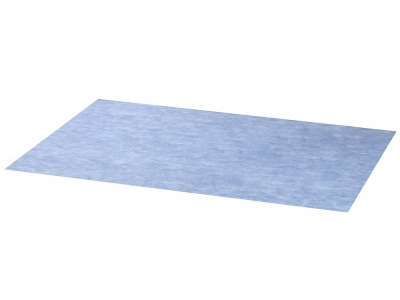
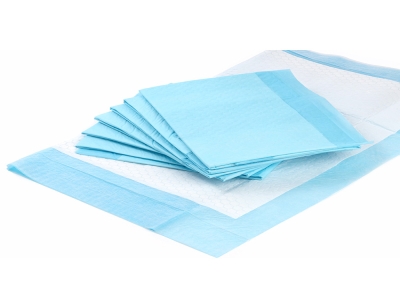
Standard underpads often only "soak up" fluid, leaving the surface damp once saturated. Underpads utilizing advanced technology (like those manufactured by Jining Jianda Medical) feature an absorbent core structure combining SAP (Super Absorbent Polymer) and Fluff Pulp:
The "Locking" Power of SAP: SAP can absorb dozens of times its own weight in liquid, instantaneously converting it into a gel. This ensures that even under pressure, liquid does not Rewet (or back-flow) onto the surface. This "Zero Rewet" property ensures the patient's skin is consistently in contact with a dry surface, actively preventing IAD.
2. Flatness and Friction Control: Eliminating "Wrinkle Trauma"
The skin on the back of a long-term bedridden patient is extremely fragile; even minor wrinkles in linens or pads can become ignition points for pressure ulcers.
Low-quality underpads tend to clump, tear, or shift during use, forming uneven, hard masses that increase localized Shear Force.
Diamond Embossing Design: High-quality pads use a thermal pressing process to create a diamond quilting pattern. This not only accelerates fluid distribution but, more crucially, stabilizes the inner core, ensuring the pad remains flat and clump-free during patient turning and movement, thereby mitigating localized high-pressure points caused by wrinkles.
3. Reinforced Backsheet: A Strategic Nursing Aid
In clinical settings, nurses frequently use the underpad to assist with patient turning, repositioning, or lateral transfers. If the backsheet lacks integrity, it can tear during pulling, leading to operational failure and contamination.
Reinforced PE Backsheet: A high-quality underpad uses a resilient, waterproof backsheet capable of withstanding tension. This allows the pad to function as a temporary draw sheet, reducing the direct push-pull friction on the patient's skin during handling and physically protecting the vulnerable epidermis.
4. The Economic Equation: Prevention Cost vs. Treatment Cost
While high-absorbency, SAP-containing underpads may have a slightly higher unit price than basic paper pads, from a Total Cost of Ownership (TCO) perspective, they are more cost-effective:
Reduced Frequency of Change: High absorbency means one pad can replace two, cutting down on nursing workload and minimizing interruptions to patient rest.
Laundry Savings: Effective fluid containment drastically reduces the cost of cleaning and sterilizing hospital bed linens.
Risk Mitigation: Lowering the incidence of pressure injuries and dermatitis not only alleviates patient suffering but helps hospitals avoid the expensive treatment costs and potential legal risks associated with complications.
Conclusion
In modern nursing, the Underpad should not be viewed as a low-value consumable but as an essential component of the Skin Care Solution. Choosing a pad with superior fluid-locking capacity, surface dryness, and structural stability constructs a robust defense line against pressure injuries and infection. For healthcare organizations, this is a key detail that reflects high-quality care and elevates patient satisfaction scores.