





Procurement Wisdom and the Total Life Cycle Cost (LCA) of Surgical Gowns
1. The Hidden Costs Behind the Price Tag
Looking solely at the initial purchase price, cotton gowns seem significantly cheaper since they can be washed and reused. This calculation, however, ignores the immense Reprocessing Costs:
Washing and Sterilization: Consumes vast amounts of water, electricity, steam, and expensive industrial detergents.
Labor and Logistics: Involves significant human resources for collection, sorting, repair, folding, packaging, sterilization, and intra-hospital transport.
Wear and Depreciation: After repeated washing and high-temperature sterilization, cotton fibers break down, thinning the material. The Barrier Performance drops dramatically. A seemingly intact cotton gown may no longer block microscopic bacteria.
In contrast, disposable surgical gowns offer cost transparency—the cost per use is fixed and predictable, eliminating uncertainty within the supply chain.
2. Infection Control: The Non-Negotiable Baseline
The sole purpose of a surgical gown is to establish a sterile barrier.
Reusable Micro-Pore Risk: As cotton fabric is washed repeatedly, the pore size increases. Even without visible damage, the pore size may exceed the diameter of microorganisms. When exposed to fluids (blood or irrigation) during surgery, the "Wicking Effect" can cause bacteria to penetrate the fabric instantly, leading to Surgical Site Infection (SSI).
Disposable Certainty: Every disposable surgical gown from
Jining Jianda Medical undergoes stringent quality checks (such as hydrostatic testing). It guarantees sterile integrity from start to finish, completely eliminating the risk of cross-contamination arising from inadequate washing or fabric degradation.
3. The Environmental Myth: Water Footprint vs. Carbon Footprint
The notion that "disposable equals pollution" is often an outdated stereotype. Modern LCA studies show that:
Water Consumption: The cleaning process for reusable gowns consumes staggering amounts of water and produces large volumes of wastewater containing detergents, bleach, and bio-contaminants, posing a massive burden on water systems.
Energy and Carbon Emissions: Autoclaving (high-temperature, high-pressure sterilization) is an energy-intensive process. Conversely, disposable gowns often use lightweight SMS material with controlled production energy consumption. Post-use, they can often be utilized for Waste-to-Energy recovery, offsetting disposal impact.
4. Supply Chain Resilience
In the face of unexpected public health crises (such as a pandemic), the supply of reusable surgical gowns is extremely fragile—if the laundry facility shuts down due to quarantine or if the sterilizer fails, the operating rooms face the risk of immediate paralysis.
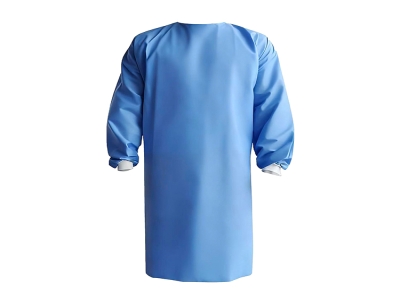
The Disposable Sterile Surgical Gown, thanks to its stockpile capability (long shelf life) and ready-to-use nature, allows hospitals to build a robust strategic material buffer, ensuring that emergency surgeries can proceed without interruption during any crisis.
Conclusion
Procuring surgical gowns is fundamentally a decision to purchase Safety and Efficiency. While reusable gowns carry a historical legacy, in the pursuit of precision medicine and zero infection rates, the Disposable Sterile Surgical Gown has proven to be the more forward-thinking choice. Its stable protective performance, controllable total cost, and supply chain security represent not just a technical upgrade but an innovation in modern hospital management philosophy.