



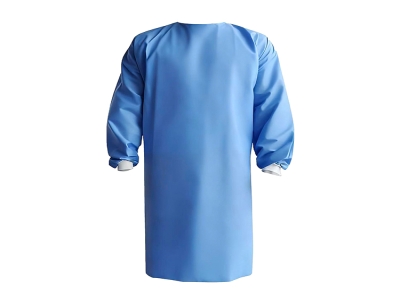
"Protective Essential": Disposable Surgical Gowns
In recent years, with the continuous development
of China's medical and healthcare industry, greater emphasis has been placed on
the safety management of hospital medical quality. Preventing hospital-acquired
infections and safeguarding the safety of both medical staff and patients are
of crucial importance.
Currently, over 10 million clinical surgeries are performed worldwide each year. During surgical procedures, medical staff inevitably come into contact with patients' bodily fluids and blood. Considering patient safety, addressing practical issues related to infection control during surgery, and reducing the risk of occupational exposure for high-risk personnel, it is essential to use disposable surgical gowns to establish a safe protective barrier.

Cotton Surgical Gowns Gradually Phased Out
Previously, scrub suits and surgical gowns
were consistently made of cotton. Cotton surgical gowns offer good comfort and
breathability; however, as hospital infection standards continue to rise and
protective requirements for surgical patients and medical staff become more
stringent, cotton surgical gowns have gradually been phased out.
Relevant experiments have shown that cotton
surgical gowns have no bacteria-blocking effect, nor do they possess
water-resistant or anti-permeation properties. They have low strength and poor
wash durability—repeated washing easily causes damage and lint shedding, which
in turn generates particulates. These particulates act as carriers for
pathogenic bacteria, easily leading to allergies, infections, and other issues.
The Specifications for Hospital
Infection Control in Operating Departments (Rooms) clearly stipulates:
"The fabric of scrub suits and surgical gowns for medical staff shall be
comfortable, breathable, impermeable to liquids, of appropriate thickness, with
non-shedding fibers, and anti-static. After use, they shall be promptly
cleaned, disinfected, or sterilized." Since then, the use of surgical
gowns has gradually become standardized.
Current Development Status of Surgical
Gowns in China
The World Health Organization (WHO) issued
the Global Guidelines on the Prevention of Surgical Site Infections in
2016, which provides recommendations on the use of surgical gowns: Using
disposable surgical gowns during surgery can help prevent surgical site
infections.
In recent years, Chinese medical staff have gained a deeper understanding of surgical gowns with high protective performance, and the demand for such gowns has also increased. Consequently, the materials used in surgical gowns have become a key research focus. Currently, many new functional materials exhibit excellent properties; however, when used in combination, their effectiveness may be neutralized or not fully utilized. How to combine several functional materials to endow medical products with multiple outstanding properties is a problem worthy of practical exploration at present.
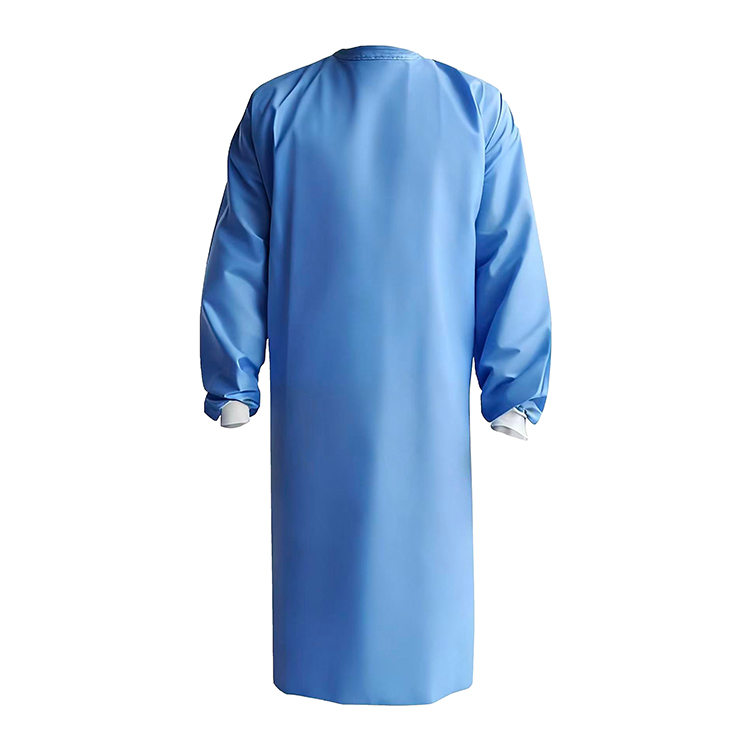
Surgical Gowns Made of New Composite
Materials
Currently, most surgical gowns available on
the market are made of SMMS non-woven fabric, while some manufacturers use
SMMMS non-woven fabric. For surgical gowns made of new composite materials, the
inner and outer layers are composed of regular fabric or fabric with added
functions such as water resistance, anti-static properties, and
anti-lint/pilling. The middle layer is laminated with a medical-grade film,
which can effectively block the penetration of blood, bacteria, and even
viruses. At the same time, water vapor generated by the medical staff's skin
can pass through the medical film, ensuring physiological comfort during wear.
Disposable surgical gowns made of new
composite materials exhibit excellent protective performance, with good
performance in hydrostatic pressure testing, liquid penetration resistance,
blood penetration resistance, and microbial penetration resistance. They can
block the invasion of viruses, bacteria, and other pathogens to protect medical
staff, featuring bacteria-blocking, anti-bacterial, and comfortable properties.
During surgery, they prevent bacteria on medical staff's clothing from
contaminating the patient's surgical incision, while also ensuring the safety
of medical staff and preventing occupational exposure.
Disposable surgical gowns can minimize the
transmission of infectious substances to patients' surgical wounds, helping to
prevent intraoperative wound infections. The use of surgical gowns with liquid
penetration resistance can also reduce the risk of medical staff being exposed
to infectious bacteria in blood or bodily fluids.