During complex surgeries that last for hours, surgeons face a double burden: intense mental load and physical heat radiation from surgical lights. Often, we focus solely on the barrier function of sterile surgical gowns, overlooking their profound impact on the physiological state of the surgeon.
When a surgical gown's breathability fails to balance body temperature, the resulting "heat stress" is not just a physical discomfort—it is a potential medical risk. This article explores why choosing a high-performance Disposable Sterile Surgical Gown is, in fact, an investment in operating room safety and efficiency.
1. The Physiological Battle Between Breathability and Focus
For the lead surgeon, being drenched in sweat is not the only symbol of dedication; sometimes, it signifies a limitation in equipment. Traditional materials or inferior gowns may block fluids, but they also trap heat. Studies show that excessive heat accumulation leads to increased heart rate and cognitive fatigue, which can subtly affect hand stability and judgment.
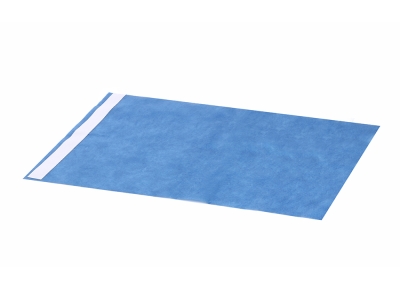
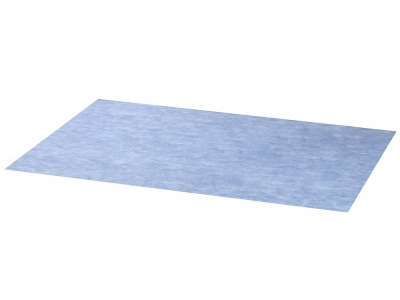
Modern high-quality surgical gowns typically utilize SMS (Spunbond-Meltblown-Spunbond) composite non-woven fabric. This material structure ingeniously resolves a contradiction: the middle meltblown layer forms a dense barrier against bacteria and fluids, while the outer spunbond layers provide necessary strength and breathability. This "breathing" barrier effectively wicks away moisture and heat from the medical staff's body, maintaining a dry microenvironment. This is not merely about comfort; it is about ensuring that the surgeon maintains the same level of focus during the final suturing as they did at the initial incision.
2. The Sterile Defense and Tactile Feedback in Cuff Details
The design of the gown's cuff is often overlooked by non-professionals, yet it is the most critical interface in sterile operations.
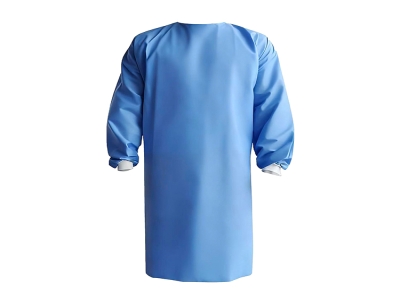
Inferior cuff materials that are rough or lack elasticity can cause wrist indentations after prolonged glove usage, or even slip during vigorous movements, compromising the sterile field. Professional disposable surgical gowns employ soft Knitted Cuffs. This design creates a perfect interference fit with surgical gloves. It ensures a comfortable seal that prevents fluid rollback along the arm while avoiding constriction that could impede blood circulation, ensuring that the tactile sensitivity of the surgeon's fingertips remains at its peak.
3. The Trust Cost: From "Reusable" to "Disposable"
While reusable cotton gowns still exist in some regions, their greatest hidden danger lies in the microscopic breakage of fabric fibers with repeated washing. This leads to an exponential decline in barrier performance that is impossible to detect with the naked eye.
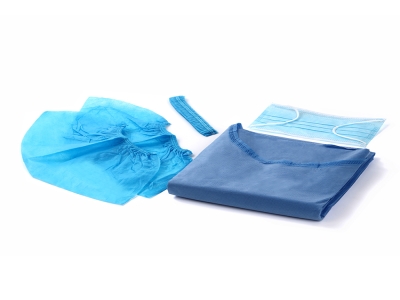
Disposable sterile surgical gowns offer the guarantee of "Constant Performance." Every gown taken from its sterile packaging possesses optimal anti-static properties, as well as alcohol and blood resistance, just as it did when it left the factory. This certainty eliminates the surgical team's worry about equipment failure, allowing them to devote themselves wholeheartedly to the battle of saving lives.
Conclusion
A superior surgical gown should act like a second skin: offering steel-like defense with air-like lightness. In procurement decisions, we should not look only at the cost per unit, but at the enhancement in surgical quality brought about by improved surgeon comfort. Ask yourself: Is your surgical team wearing a burden that hinders performance, or armor that facilitates success?