


What is the Shelf Life of Masks? Can Expired Masks Be Used?
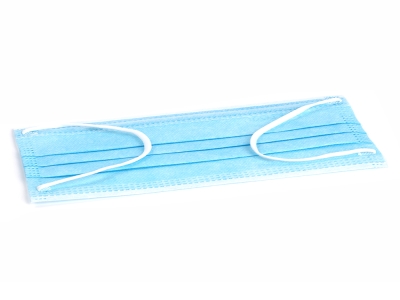
Currently, the shelf life indicated in the instructions for commonly used disposable medical masks, surgical masks, and medical protective masks is usually 2 to 3 years.
When surgical masks remain in their intact
original packaging, stored in an environment with relative humidity below 80%,
normal temperature, no direct sunlight, good ventilation, and cleanliness,
their sterile shelf life is 2 years.
How Long Does a Mask Provide Effective
Protection?
Masks should be used promptly after
opening. Regardless of the type, the protective effect of a mask is limited,
and regular replacement is necessary.
- The effective performance of medical protective masks lasts for
6 to 8 hours.
- Surgical masks should generally be replaced every 4 hours.
- The usage time of disposable medical masks should not exceed 4
hours.
- There is no specific time limit for N95 masks. For
non-frontline medical staff using N95 masks, replacement can be done
within 2 to 3 days based on usage conditions.
Non-medical masks (such as dust masks,
cotton yarn masks, activated carbon masks, sponge masks, etc.) can be reused
within their shelf life. Whether to replace them depends on the cleanliness of
the masks.
The longer a mask is used, the more large
particles are blocked on its surface or ultra-fine particles clog the gaps in
its filtering material, leading to reduced filtration efficiency and increased
breathing resistance.
Situations Requiring Immediate Mask
Replacement
- The mask is damp.
- There is an unusual odor inside the mask.
- Breathing resistance increases significantly.
- The mask is torn or damaged.
- The mask fails to fit the face properly.
- The mask is contaminated (e.g., with blood stains or droplets).
- The mask is used in an isolation ward or has been in contact
with patients.
Can Expired Masks Be Used?
Expired masks cannot be used.
Medical masks can maintain a sterile state
within their shelf life. Once expired, however, their sterility can no longer
be guaranteed, and their protective performance will gradually decrease over
time.
In addition, masks themselves are prone to
moisture. After a long period, they are likely to breed bacteria, viruses,
other pathogenic microorganisms, and other harmful substances such as mold.
Their protective properties, such as adsorption and splash resistance, will
also decrease significantly.
Wearing such masks may cause skin allergies
or eczema.